top of page


Search

Lesson-3 (Complementary Video-note) Water Potential, Transport and Vapour Pressure Deficit (VPD) 02NOV2026
Why can a 30-metre coconut palm lift water without a pump? The full Lesson 3 lecture follows water from soil to root, stem, leaf and air, then on to humidity and vapour pressure.

Scense Me
2 days ago4 min read

DEMO Practical Seed Viability and Moisture Content 26OCT2026
Watch the class demonstration of three seed quality tests in one session: the tetrazolium viability test, the rolled-towel germination test and seed moisture content by rapid oven drying and slow sun drying, with the reasons behind each step.
Scense Me
2 days ago5 min read
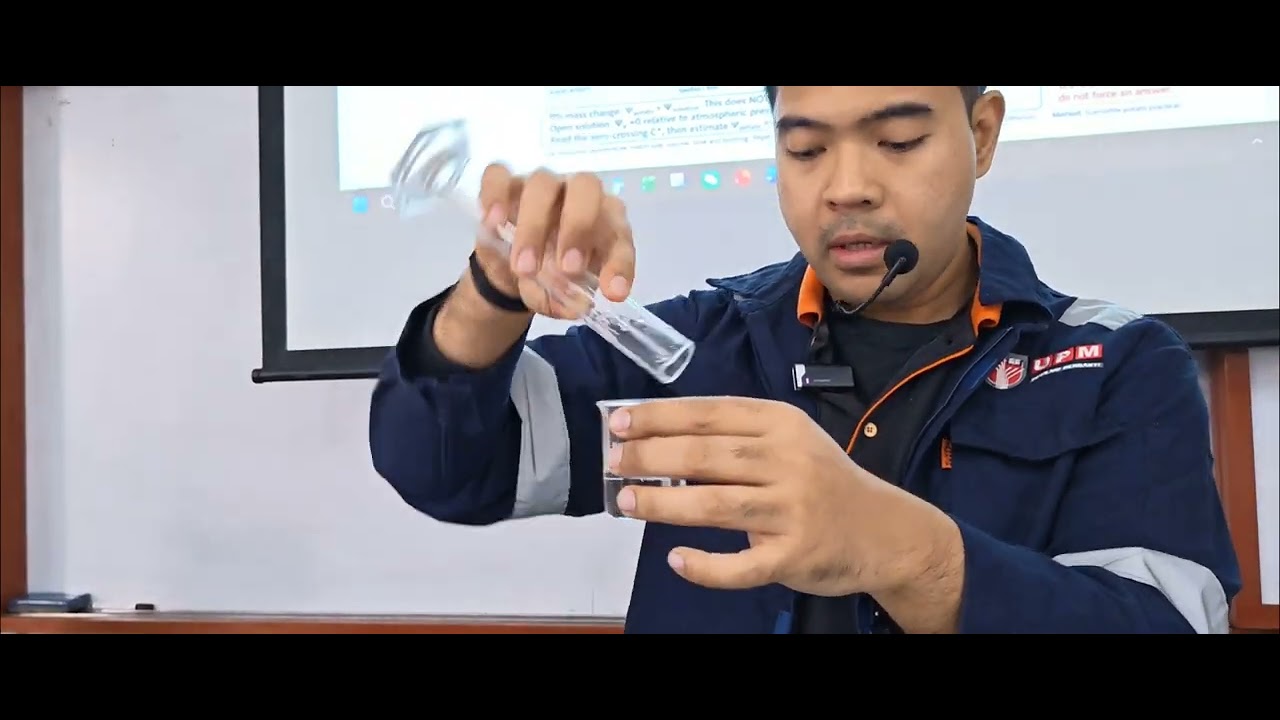
DEMO Practical-Psi 28OCT2026 Investigating Water Potential of Potato Tissue
Soak potato cylinders in sucrose, weigh them, and find the concentration where mass stops changing. That point reveals the tissue's water potential.
Scense Me
3 days ago5 min read

Lesson-2B (Complementary Video-note) Seed Germination and Dormancy 26OCT2026
How does a dry seed wake up and become a seedling? Lesson 2B of AGR3301 Crop Physiology covers water uptake, hormones, food mobilisation in barley, light control through phytochrome, and seedling establishment.
Scense Me
5 days ago3 min read


Lesson 3: How Plants Move Water through Water Potential, Transport and Vapour Pressure Deficit (VPD)
How does water reach the top of a 30 m palm with no pump? Learn water potential, transport and vapour pressure deficit (VPD), step by step.
Scense Me
Oct 278 min read


Lesson-2 Seed Germination and Dormancy 18OCT2026
Every crop starts as a seed that must survive storage, wait out dormancy and then germinate. This post follows the journey from seed to seedling, covering seed structure, storage, dormancy, germination and establishment, with links to Malaysian crops such as rice and oil palm.
Scense Me
Oct 185 min read


Crop Physiology: Essential Links Directory (Sem 1, 2026-27)
Access all essential links for the AGR3301 Crop Physiology class (2026-27 Sem 1) in one place. Find quick shortcuts to lecture notes, lab practicals, and the master data sheet
Scense Me
Oct 81 min read

Lesson-1A (Complementary Video-note) Introduction to Crop Physiology 5OCT2026
When does a plant become a crop? What does "physiology" really mean? This first lecture introduces the three tasks of crop physiology (understand, diagnose, act) and the key ideas of growth, development and differentiation, with pitcher plants, Pokémon and a 120-metre redwood along the way.
Scense Me
Oct 731 min read


Lesson-1B Crop Growth Analysis 5OCT2026
Designed to fit the 500-character limit in your Wix editor)
Welcome to Lesson 1B of Crop Physiology (AGR3301). This post breaks down the mathematics of crop growth analysis, from measuring total dry weight to calculating the 7 key parameters like LAI, CGR, and RGR. Discover how to read a sigmoid growth curve, understand leaf efficiency, and see exactly why agronomists must use natural logarithms (ln) to accurately track continuous plant growth
Scense Me
Oct 63 min read


Lesson-1A Introduction to Crop Physiology 5OCT2026
All crops are plants, but not all plants are crops. While plant physiology explains how an individual plant works, crop physiology uses that knowledge to predict and manage yield, quality, and resilience at the field level. This post breaks down the three essential tasks of crop physiology: understanding cellular mechanisms, diagnosing plant functions, and managing environmental responses. Discover how applying these principles allows agronomists to diagnose field issues and
Scense Me
Oct 54 min read


Understanding Plant Performance: The Theory Behind Chlorophyll Meters, Spectrometers, and Gas Exchange Systems
Introduction Welcome to your preparation guide for this week’s practical lab session! Before we get hands-on with the equipment, it is crucial to understand the physiological principles that allow us to measure plant health, light environments, and photosynthetic rates. In the upcoming practical, we will demonstrate three essential scientific instruments: The Konica Minolta SPAD-502 Chlorophyll Meter The LI-180 Spectrometer The LI-6800 Portable Photosynthesis System Rea
Scense Me
Jun 144 min read


AGR3301 CROP PHYSIOLOGY TEST-2 (10% social media engagement + 5% Video Caption; total =15% )
Submit by group, not individually, so play nice, you all. A. [10%] Create a video about 10 to 15 min, with your group talking-teaching the public about the PGR topics assigned to you as follows: 1. Strigolactone POWER RANGERS 2. Brassinosteroid VERONICA 3. Jasmonate (IMUT PEOPLE) 4. Salicylates SUNFLOWER 5. Trehalose (TGP) UBI KAYU 6. Hydrogen Peroxide (H2O2) MATCHA LATTE Upload it to Google Drive, then provide me with a link to your uploaded video. Your video must
Scense Me
Jun 42 min read


PRACTICAL MANUAL: Plant Growth Regulators Gibberellic Acid-3 (GA-3)
Introduction Gibberellic Acid-3 (GA-3) is a naturally occurring plant growth regulator that causes a variety of physiological effects, including the stimulation of seed germination and stem elongation. GA-3 occurs naturally in the seeds of many species and is produced commercially by growing Gibberella fujikuroi fungus cultures, followed by extraction and purification. Presoaking seeds in a GA-3 solution can trigger rapid germination in many types of highly dormant seeds. In
Scense Me
Jun 33 min read


LESSON 4:Phytohormones and Growth Regulators in Plants
Whether it is a seedling pushing through the soil or a fruit ripening on a branch, every movement a plant makes is orchestrated by complex chemical messengers known as Plant Growth Regulators (PGRs) or Phytohormones. Derived from the Greek word hormaein, meaning "to excite," these natural molecules work in minute concentrations to produce substantial physiological changes. What Defines a Phytohormone? Unlike animals, plants do not have specialised glands for hormone product
Scense Me
May 32 min read

How to Count and Measure Roots Using ImageJ: A Protocol for Auxin Experiments
https://youtu.be/PqQIvCWd6Dg Summary Technical training session established standardised ImageJ measurement protocols for quantifying auxin experiment root growth and length. ImageJ Setup and Scaling: Participants installed the ImageJ software and configured image scaling by setting rulers to establish consistent pixel-to-millimetre units. Counting and Measuring Roots: Researchers utilised multi-point tools for root counting and freehand tracing for curvature measurement. Ea
Scense Me
Apr 306 min read


AGR3301 CROP PHYSIOLOGY TEST-1 (FULL MARKS 120, as 10% overall + 5% Video so total =15% )
Submit by group, not individually, so play nice, you all. A. [10%] Answer Questions 1 to 40, find the answers in the picture and puzzle below, the words are in anagram form, find the anagram form and write the real words, then also find the answers in the crossword puzzles, highlight the answer using the pencil colour provided (Sample answers have been provided). B. [5%] Create a video about 10 min, with your group talking about anything that you have learned so far i
Scense Me
Apr 263 min read


Practical Plant Growth Analysis Galangal Plastochron
1. Introduction Growth analysis is a mathematical expression of environmental effects on the growth and development of crop plants. Classical growth analysis typically requires the destructive harvesting of representative sets of plants over several weeks, making it impossible to follow the same plant throughout an entire experiment. This practical introduces a non-destructive, single-harvest alternative by utilizing a space-for-time substitution. By examining a single frond
Scense Me
Apr 204 min read


Practical-Auxin: Investigating Root Initiation in Alternanthera sissoo (Bayam Brazil)
Introduction & Theory Plant propagation through stem cuttings is a fast and cost-effective technique that maintains the genetic traits of the parent plant. The success of this method depends heavily on the rapid formation of adventitious roots. This process is regulated by plant hormones called auxins, which stimulate cell division in the stem's vascular tissues. Indole-3-butyric acid (IBA) is a widely used synthetic auxin because of its stability and effectiveness across man
Scense Me
Apr 203 min read


Practical-Psi: Investigating Water Potential of Potato Tissue
Aim To determine the water potential of potato tissue by immersing potato cylinders in sucrose solutions of different concentrations and measuring the percentage change in mass. Quick Guide: Water Potential (Ψ) Figure 1. Water potential quick guide: read this before you start. Materials Fresh potato Cork borer (to cut uniform circular cylinders) Scalpel and ruler (to trim equal lengths) Balance (±0.01 g) Blotting paper/tissue 6 labelled beakers or test tubes 50 mL each of
Scense Me
Apr 134 min read


AGR3301 Crop Physiology Practical: Seed Viability and Moisture Content
Practical manuals Practical manuals Sample of Lab Reports: Example of Lab Reports Welcome to the crop physiology practical for the Seed Viability and Seed Moisture Content practical sessions of the Crop Physiology (AGR3301) course! Accurate assessment of seed quality is vital for predicting crop performance and ensuring optimal storage. We demonstrate and compare three distinct approaches for assessing the seed viability: 1. Tetrazolium (TZ) Test (Chemical/Quick Test): Learn

PlantHouse Enterprise
Apr 71 min read
bottom of page